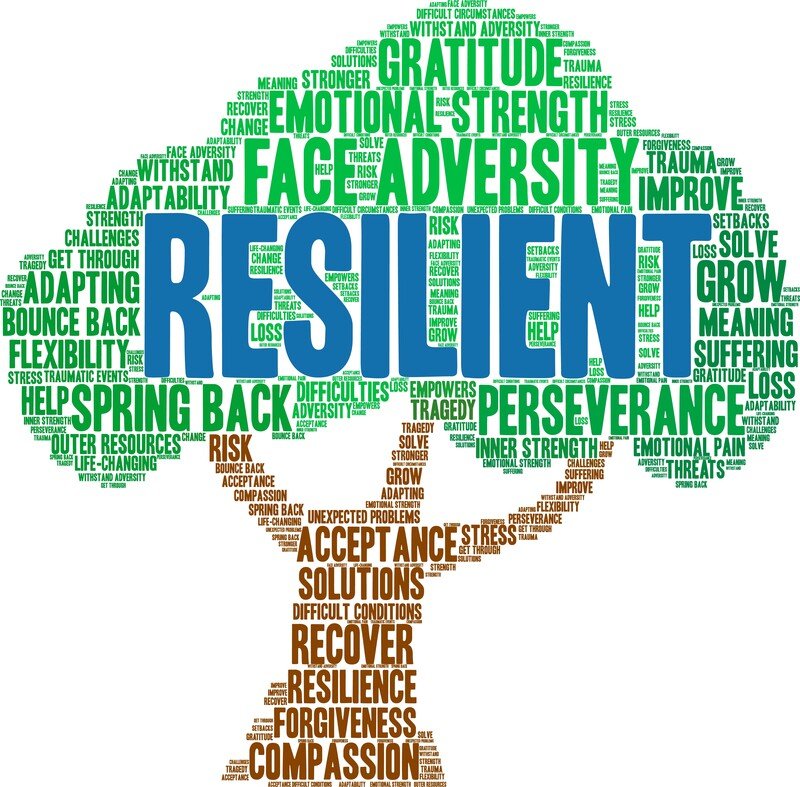
Life doesn't always go according to plan. In fact, it rarely does. We all encounter moments that test our limits, shake our foundations, and leave us questioning our capabilities. But what if these very struggles weren't just obstacles, but the raw material for something extraordinary? This is the essence of Building Unshakeable Resilience: Lessons from Adversity. It's not about avoiding hardship; it's about learning to thrive because of it, transforming struggle into profound inner strength.
It’s a journey that moves far beyond simply "bouncing back." True resilience is a deep, often uncomfortable, yet ultimately liberating transformation. It involves growing through challenges – mind, body, and spirit – learning profound lessons, and emerging not just intact, but stronger, more adaptable, and more authentically you. This isn't an innate gift bestowed upon a lucky few; it's a profound capacity we actively build, understanding our own intricate wiring, honoring our deepest feelings, and connecting to a purpose larger than ourselves.
At a Glance: Building Your Inner Fortress
- Adversity as a Catalyst: See challenges as opportunities to grow stronger, literally rewiring your brain.
- Clarity Fuels Power: Cut through mental fog to conserve energy and focus your strength.
- Embrace Productive Failure: Transform setbacks into wisdom through mindful learning.
- Practice Self-Compassion: Treat yourself with kindness, especially when things go wrong.
- Cultivate a Possibility Mindset: Shift from fear to opportunity when facing the unknown.
- Know Thyself: Understand your natural tendencies and preferences to act authentically.
- Transform Pain into Purpose: Channel past struggles into meaningful action and growth.
- Develop Strategic Thinking: Enhance critical thinking for clearer communication and problem-solving.
- Build Your Toolkit: Arm yourself with diverse strategies for your mind, body, and spirit.
Why "Bouncing Back" Isn't Enough: The Art of Anti-Fragility
Many of us are taught to "bounce back" from adversity, implying a return to a previous state. But genuine resilience asks more of us. It calls us to become "anti-fragile" – a concept where instead of merely recovering from stress and shocks, we actually grow stronger because of them. Think of it like a muscle that tears during a workout, then rebuilds itself thicker and more capable.
This process isn't just metaphorical; it's deeply rooted in our biology. Our brains are incredibly adaptive, a phenomenon known as neuroplasticity. Every time you consciously navigate a difficult situation, learn from a mistake, or push through discomfort, you are literally rewiring your brain, strengthening neural pathways that support adaptability, problem-solving, and emotional regulation. True resilience isn't just about enduring; it's about evolving. It’s about leveraging these real-life struggles to become more robust, more capable, and better equipped to manage future stress, no matter what form it takes.
The Compass of Clarity: Navigating Mental Chaos
One of the most insidious effects of adversity is the way it can cloud our judgment, making us feel overwhelmed and paralyzed. This often stems from a lack of clarity. When our minds are awash with conflicting thoughts, anxieties, and uncertainties, our mental energy drains away, leaving us exhausted and ineffective.
Gaining clarity is like finding your true north amidst a storm. It means taking a moment to identify what genuinely matters to you in the present situation and discerning the very next, most practical step you can take. This simple act of focused intention calms the mental chaos, conserves precious energetic resources, and allows your personal power to flow freely. When you know what’s important and what to do next, even if it's a tiny step, you regain a sense of agency that is fundamental to resilience. You might find that a deeper guide to navigating uncertainty can provide invaluable insights here.
The Alchemist's Mindset: Productive Failure
The word "failure" often conjures images of defeat, shame, and dead ends. Yet, for the resilient individual, "failure" is merely feedback – a powerful catalyst for learning and growth. This isn't just positive thinking; it's a practice akin to spiritual alchemy, transforming setbacks into profound wisdom.
Cultivating a mindset of productive failure involves a three-step process:
- Mindful Observation: When something doesn't go as planned, resist the urge to immediately assign blame or get caught in an emotional spiral. Instead, adopt a detached, objective stance. What exactly happened? What were the circumstances, the inputs, the outcomes? Analyze the situation without emotional charge, like a scientist examining data.
- Extracting Lessons: Once you've observed, delve deeper. What core beliefs were challenged? Were there skills you assumed you had but need to hone? Were there external or systemic factors at play that you hadn't considered? This step is about honest self-assessment, identifying the precise points of weakness or misunderstanding.
- Integration & Adaptation: The lessons you extract are useless if they remain theoretical. This crucial final step involves applying these learnings to future actions. Refine your approach, strengthen your resolve, and integrate new understandings into your worldview. Thanks to neuroplasticity, each cycle of productive failure not only adds to your wisdom but actively rewires your brain to be more adaptive and resilient for the challenges ahead. Embracing this perspective is a cornerstone of cultivating a robust mindset.
The Gentle Strength: Self-Compassion as a Foundation
In moments of struggle, our inner critic often springs to life, barraging us with self-deprecating thoughts and harsh judgments. This self-criticism, far from motivating us, actually triggers a threat response in the brain, flooding our system with stress hormones and making healing and learning exponentially harder.
Self-compassion offers a powerful alternative. Research shows that practicing self-compassion activates brain regions associated with caregiving and emotional regulation, effectively soothing the nervous system. It’s like offering yourself the same kindness, understanding, and support you would give to a dear friend facing similar difficulties.
This creates a safe internal space for healing and growth. Self-compassion allows you to:
- Acknowledge Suffering: You can recognize your pain and difficulty without being overwhelmed by it.
- Maintain Motivation: Instead of being paralyzed by shame, you're encouraged to learn and improve from a place of care, not fear.
- Learn Without Shame: Mistakes become opportunities for growth rather than reasons for self-punishment.
Self-compassion isn't self-pity or an excuse for inaction; it's a vital nutrient for resilience, allowing you to endure hardship with greater inner strength and emerge more whole. It's an essential component of mastering your emotional landscape.
Navigating Uncertainty with a Possibility Mindset
The human brain is wired for prediction. In times of uncertainty, this wiring can become a trap, leading us to conjure countless negative scenarios that deplete our resilience before a challenge even fully materializes. A prediction mindset, especially when focused on negative outcomes, drains mental and emotional energy.
Cultivating a possibility mindset shifts this dynamic entirely. Instead of attempting to control or predict every outcome, you learn to trust in a larger process, embracing the unknown as a realm of potential and creativity. This involves:
- Trusting Adaptability: Having faith in your own capacity to adapt, no matter what arises.
- Consciously Challenging Fear: Actively questioning and reframing fear-based predictions.
- Focusing on Agency: Identifying what you can control or influence, even if it's just your reaction.
- Exploring Creative Solutions: Asking "What if?" with an open mind, looking for opportunities rather than just threats.
This mindset moves your focus from what you fear might happen to what you can create or learn from the situation, transforming anxiety into curiosity and empowering action.
The Power of Authentic Self-Awareness: Acknowledge Your Reality
Building unshakeable resilience also requires a profound understanding of yourself. This means acknowledging your natural tendencies, your preferences, your strengths, and your limitations. There's an incredible power in showing up authentically, contributing your unique perspective, and offering your opinions honestly, rather than trying to fit into a mold or mask your true self.
When you acknowledge your reality – who you are, what you genuinely value, and how you naturally operate – you create a solid internal anchor. This self-awareness prevents you from wasting energy on efforts that are misaligned with your core, and instead allows you to channel your energy into pathways that genuinely fulfill you and contribute meaningfully. It's about finding your authentic stride, even amidst pressure.
From Scars to Superpowers: Transform Pain into Purpose
Perhaps one of the most profound lessons adversity offers is the opportunity to transform pain into purpose. Dwelling on past experiences, while sometimes necessary for processing, can trap us in victimhood. Resilience, however, compels us to shift our focus: not to erase the past, but to leverage it.
This means consciously choosing to see your struggles not as defining traumas, but as forge-fires that have shaped your unique strengths, insights, and empathy. Your scars can become your superpowers. By focusing on overcoming adversity and channeling those hard-won lessons into a meaningful direction – perhaps helping others, championing a cause, or pursuing a long-held dream – you convert suffering into significance. You might discover how powerful this transformation can be when you Explore Scars Wonderland.
The Architect's Mind: Develop Strategic Thinking
Navigating complex challenges requires more than just grit; it demands intelligence and foresight. Developing strategic thinking is a critical component of unshakeable resilience. This involves mastering critical thinking skills – the ability to analyze information objectively, identify biases, evaluate arguments, and synthesize diverse data points.
Beyond just critical thinking, strategic thinking also encompasses understanding how people process information, how they're motivated, and how they react under pressure. This insight enables you to communicate more thoughtfully, efficiently, and persuasively, whether you're articulating a need, proposing a solution, or rallying support. It empowers you to anticipate obstacles, plan effectively, and make informed decisions, even when the path ahead is unclear. Sharpening your strategic thinking skills can profoundly impact your ability to navigate challenges.
Your Resilience Toolkit: Practical Steps for Development
Resilience isn't built in a vacuum or through passive wishing. It's forged through deliberate practice and courageous action. Here are practical steps to actively cultivate your inner strength:
1. Face Challenges Head-On
It sounds counterintuitive, but to build strength, you must engage with resistance. Actively seek out opportunities to react directly to pressure. This could mean volunteering for a public speaking engagement, leading a challenging presentation, or participating in a friendly competition. These moments, which often trigger anxiety and self-doubt, are precisely where resilience is built. Each time you step into the arena, you stretch your comfort zone, you learn to regulate your nervous system, and you gather undeniable evidence of your capacity to cope and grow.
2. Embrace Continuous Growth
The finish line of one achievement is simply the starting line of the next. Resilient individuals understand that success is an ongoing journey with infinite room for improvement and growth. Even after achieving significant milestones, there’s always a new skill to learn, a new perspective to gain, or a deeper layer of self-understanding to uncover. This commitment to lifelong learning keeps you adaptable, curious, and perpetually evolving, preventing stagnation and fostering a dynamic sense of purpose.
3. Study Excellence
Why reinvent the wheel? Look for those who have navigated challenges with grace, power, and effectiveness. Collect and analyze examples of greatness in action. Whether it's historical figures, contemporary leaders, or even individuals in your own community, study how they build connections, structure their approaches, communicate under duress, and maintain their resolve. What were their strategies? What internal resources did they tap into? This external observation provides valuable insights and informs your own path, giving you a wider repertoire of responses.
4. Cultivate a Diverse Coping Mechanism "Inner Toolkit"
True resilience isn't reliant on a single strategy. It's about having a varied and holistic set of tools to address your mind, body, and spirit. When one approach doesn't work, you can pivot to another.
- For the Mind:
- Cognitive Reframing: Consciously changing the way you perceive a situation – transforming a "problem" into a "challenge" or a "learning opportunity."
- Mindfulness: Practicing present-moment awareness to observe thoughts and feelings without judgment, creating mental space.
- Seeking Clarity: Regularly asking yourself, "What truly matters here?" and "What's my very next step?"
- Evaluating Situations & Needs: Objectively assessing what is happening and what resources you genuinely require.
- Analyzing Potential Outcomes: Thinking through different possibilities, not to predict, but to prepare and strategize.
- For the Body:
- Breathwork: Simple, intentional breathing exercises (e.g., box breathing, diaphragmatic breathing) can immediately regulate your nervous system, shifting you from fight-or-flight to rest-and-digest.
- Movement: Physical activity, from a brisk walk to intense exercise, releases tension and boosts mood-enhancing endorphins.
- Adequate Rest & Nutrition: Your physical foundation is crucial. Prioritize sleep and fuel your body with nourishing foods to maintain sustained energy and mental clarity.
- For the Spirit/Emotion:
- Connecting with Purpose: Regularly reminding yourself of your deepest values and long-term goals provides an anchor in turbulent times.
- Journaling: Writing freely about your thoughts and feelings can help process emotions, gain perspective, and uncover insights.
- Seeking Support: Lean on trusted friends, family, mentors, or professionals. You don't have to carry every burden alone.
- Practicing Gratitude: Actively looking for things to be thankful for, even small ones, can shift your perspective and boost positive emotions.
- Allowing Emotional Expression: Giving yourself permission to feel and express a full range of emotions – sadness, anger, fear – without judgment, rather than suppressing them.
Common Misconceptions About Resilience
- "Resilient people never feel fear or anxiety." False. Resilient individuals absolutely feel fear and anxiety. The difference is they've developed the strength and strategies to move forward and be effective despite these challenging emotions. The goal isn't to eliminate discomfort, but to act in its presence.
- "Resilience means being tough and never showing weakness." On the contrary, resilience often requires vulnerability – the courage to acknowledge struggle, ask for help, and practice self-compassion. True strength isn't about emotional suppression, but emotional intelligence.
- "Some people are just born resilient." While temperament plays a role, unshakeable resilience is overwhelmingly a learned and built capacity. It's a skill developed through consistent practice, reflection, and intentional growth, not an inherent trait.
Your Ongoing Journey: Integrating Mind, Body, and Spirit
Building unshakeable resilience is a profound, lifelong journey of integrating all aspects of yourself – your thinking mind, your feeling body, and your deeper spirit. It means cultivating a nervous system that is responsive rather than reactive, an open heart capable of both giving and receiving, and an adaptable mind eager for growth.
Each challenge you encounter, met with conscious awareness and a growing arsenal of integrated tools, becomes more than just a hurdle. It transforms into an invaluable opportunity to evolve into a stronger, wiser, and more whole version of yourself. This is not a destination, but a continuous process, demanding consistent practice, unwavering dedication, and a deep belief in your own capacity for transformation. The lessons you learn from adversity are the very bedrock upon which your unshakeable future will be built.